
Getting a business loan is a major step for any small or medium enterprise. However, banks do not approve loans without proper checks. They carefully review your business records, financial information, and government registration details before granting funds. Understanding the MSME loan verification process can help you prepare correctly and improve your chances of loan approval.
Whether you are applying for working capital, expansion funding, or machinery loans, banks follow a structured verification process to ensure your business is genuine, financially stable, and capable of repayment.
MSME Loan Verification Process: How Banks Evaluate Your Business
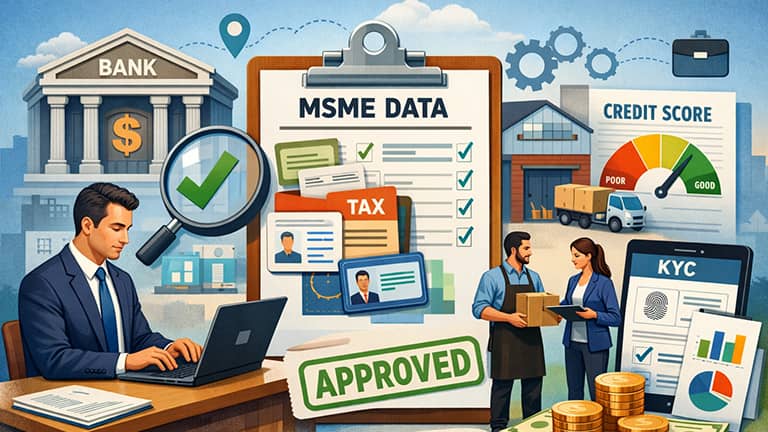
The msme loan verification process involves multiple checks performed by banks to confirm your business identity, financial strength, and repayment ability. These checks protect banks from risk and ensure loans are given to eligible businesses.
Banks verify the following key aspects:
- Business identity and legal existence
- Financial turnover and profitability
- Government registration records
- Tax compliance and GST filings
- Credit history and repayment behavior
- Owner and business background
Banks rely on official government databases, financial records, and internal risk assessment systems to complete this verification.
Why Banks Perform MSME Loan Verification
Banks must follow strict guidelines issued by regulators such as the Reserve Bank of India. These rules ensure that loans are given responsibly and repayment risks are minimized.
The main reasons for verification include:
- Confirming the business is genuine and active
- Preventing fraud or fake loan applications
- Evaluating repayment capacity
- Checking compliance with tax and government regulations
- Determining loan eligibility and limits
Proper verification protects both the bank and the business owner.
Bank Verification for MSME Loan: Step-by-Step Process
Understanding the verification stages can help you prepare better. Here is how banks typically verify MSME data:
1. Business Registration Verification
Banks first confirm your business registration details through government records. They check:
- Business name and legal structure
- Registration number and status
- Owner or partner details
- Business activity classification
They may cross-verify these details using official government portals to confirm authenticity.
2. PAN and GST Verification
Banks verify your PAN and GST details to ensure your business complies with tax regulations. This step helps banks assess your turnover and tax history. They check:
- GST filing consistency
- Tax payment records
- Turnover reported in GST returns
- Business activity matching GST classification
Accurate tax filings increase your loan approval chances significantly.
3. Financial Statement Assessment
Financial records are one of the most important parts of the msme loan assessment criteria india. Banks review:
- Profit and loss statements
- Balance sheets
- Bank statements (last 6–12 months)
- Cash flow records
These documents help banks determine whether your business can repay the loan on time. Strong financial records increase loan approval probability and allow access to higher loan amounts.
4. Bank Statement Analysis
Banks carefully review your business bank statements to understand your financial behavior. They analyze:
- Monthly cash flow
- Incoming and outgoing transactions
- Business stability and income consistency
- Loan repayment history
Stable and regular income improves your credibility.
5. Credit Score and Credit History Check
Banks verify your credit score through credit bureaus such as CIBIL. This helps banks assess your repayment reliability. They check:
- Previous loan repayment history
- Loan defaults or delays
- Outstanding loans
- Credit utilization ratio
A good credit score significantly improves loan approval chances.
6. Business Activity and Operational Verification
Banks confirm that your business is actively operating. This step may include:
- Physical business location verification
- Phone verification
- Site visits in some cases
- Verification of invoices and customer transactions
This ensures the business is genuine and operational.
Documents Required for MSME Loan Approval
To complete the verification process smoothly, you must provide accurate and complete documents. Commonly required documents include:
- Business PAN card
- Aadhaar card of owner or partners
- Business registration certificate
- GST certificate
- Bank statements
- Financial statements
- Address proof
- Income tax returns
Providing accurate documents speeds up the verification process.
How Banks Check Business Eligibility for Loan Approval
Banks use multiple factors to evaluate your eligibility. Key eligibility factors include:
Business Stability
Banks prefer businesses that have been operating for at least 1–2 years. Established businesses are considered lower risk.
Financial Strength
Consistent income, good turnover, and healthy profits improve eligibility.
Creditworthiness
Businesses with good credit history are more likely to receive loan approval.
Compliance Status
Businesses that follow tax and government compliance rules are viewed positively.
Role of Government Databases in MSME Loan Verification
Banks rely heavily on government systems to verify business details. These systems provide accurate and real-time information. Government verification helps banks confirm:
- Business existence
- Financial status
- Tax compliance
- Registration validity
You can learn more about official MSME policies and compliance requirements on the official Ministry portal: https://msme.gov.in
Business Loan Due Diligence by Banks
Due diligence is a critical step in loan approval. It involves detailed verification and risk assessment. Banks conduct due diligence to:
- Confirm business authenticity
- Evaluate financial stability
- Check repayment ability
- Identify financial risks
This process ensures responsible lending and protects the banking system. Financial institutions such as Small Industries Development Bank of India also support MSME financing and follow strict verification standards.
How Long Does MSME Loan Verification Take?
Verification time varies depending on the bank and document accuracy. Typical timelines include:
- Basic verification: 2 to 5 working days
- Detailed financial verification: 5 to 10 days
- Physical verification (if required): 7 to 14 days
Providing accurate and complete information reduces delays.
Common Reasons MSME Loans Get Delayed or Rejected
Understanding common issues can help you avoid loan rejection. Common reasons include:
- Incorrect business details
- Mismatch in tax and financial records
- Poor credit score
- Incomplete documents
- Inconsistent bank transactions
- Low turnover or weak financial performance
Fixing these issues improves approval chances.
How to Prepare for MSME Loan Verification Successfully
Proper preparation can significantly improve approval chances. Follow these important tips:
Keep Business Records Updated
Ensure your business registration, address, and activity details are correct.
Maintain Proper Financial Records
Keep organized financial statements and bank records.
File GST and Tax Returns on Time
Regular tax filing shows compliance and improves credibility.
Maintain a Good Credit Score
Avoid loan defaults and late payments.
Provide Accurate Information
Always provide correct and truthful details during loan application.
Benefits of Proper MSME Verification for Businesses
Successful verification offers several advantages. These include:
- Faster loan approval
- Higher loan eligibility
- Lower interest rates
- Improved bank credibility
- Easier access to future financing
Verified businesses gain trust from financial institutions.
Importance of Transparency During Loan Application
Transparency plays a crucial role in loan approval. Providing false or incomplete information may result in:
- Loan rejection
- Legal consequences
- Blacklisting by banks
Honest and accurate information ensures smooth approval.
How Updated MSME Records Help in Faster Loan Approval
Banks prefer businesses with updated and verified records. Accurate government and financial records reduce verification time. Updated records help in:
- Faster verification
- Higher loan approval chances
- Increased loan limits
- Improved trust with lenders
Keeping records updated is essential for long-term business growth.
Conclusion
Understanding the msme loan verification process is essential for small businesses seeking financial support. Banks carefully verify business identity, financial stability, tax compliance, and credit history before approving loans.
Proper documentation, accurate government records, and strong financial performance significantly improve approval chances. By maintaining transparency, filing taxes regularly, and keeping business records updated, MSMEs can ensure faster loan approvals and easier access to financing.
Loan verification is not just a formality—it is a critical process that ensures responsible lending and supports genuine businesses in achieving sustainable growth.